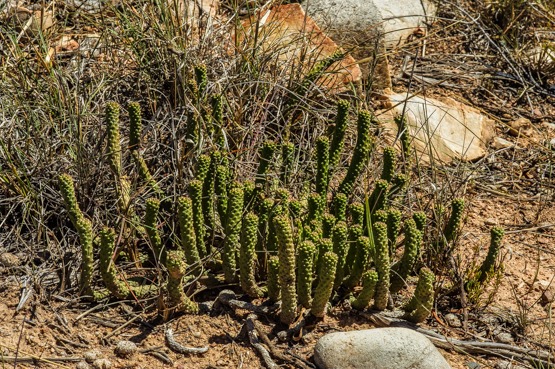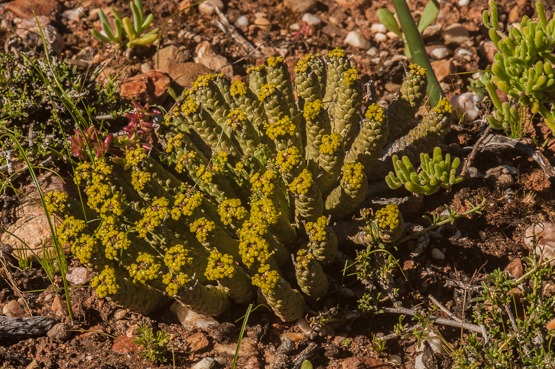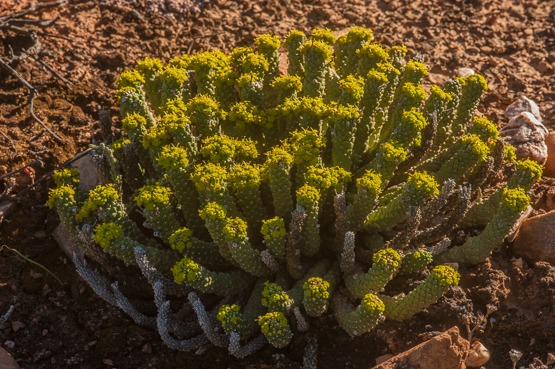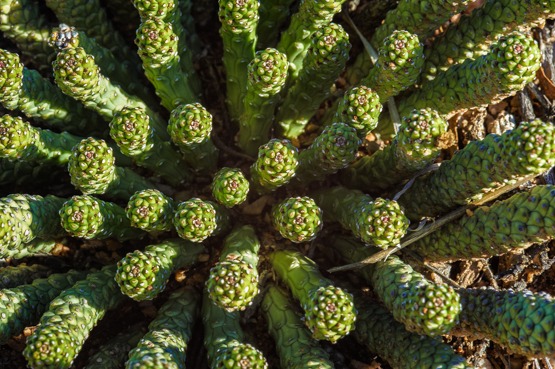
Euphorbia tuberosa (incl. E. crispa)

Common names: Melkbol, Wilderamenas

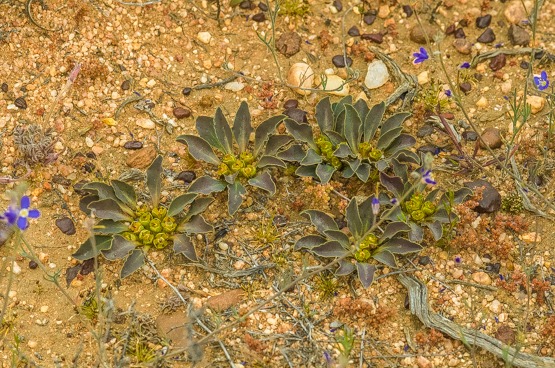
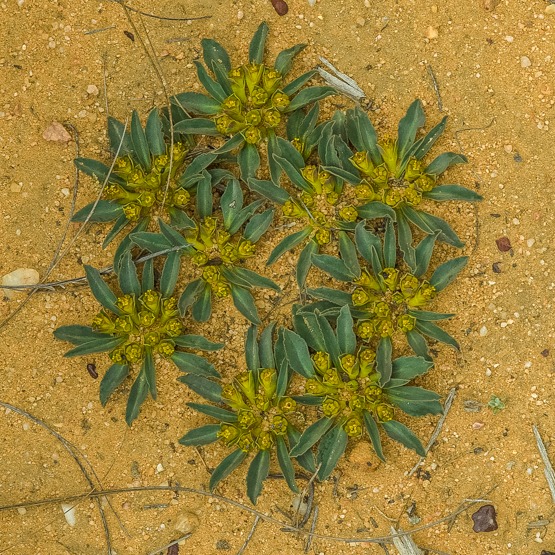
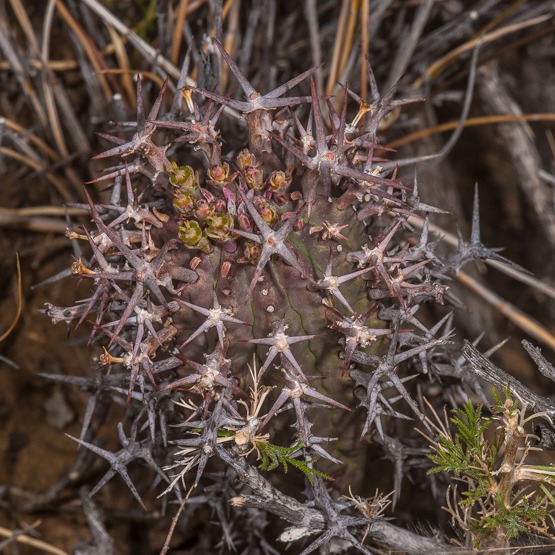
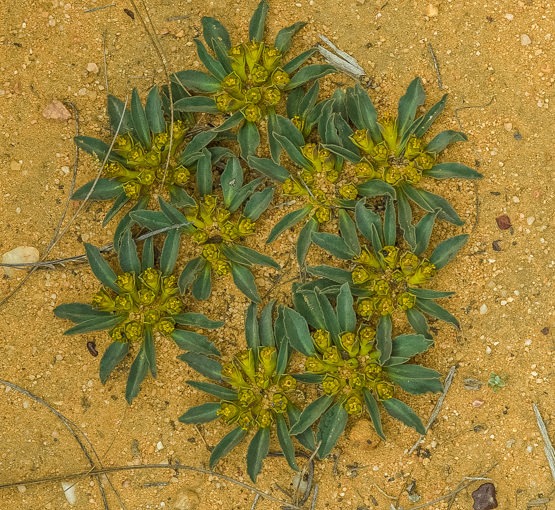
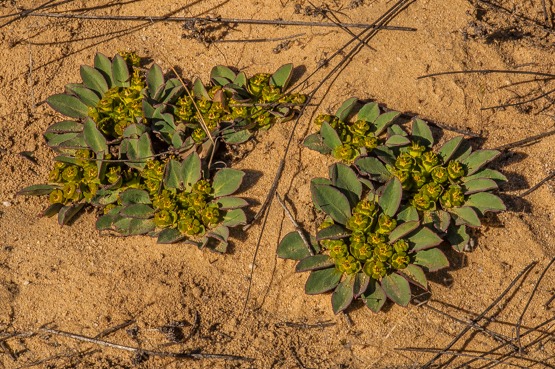
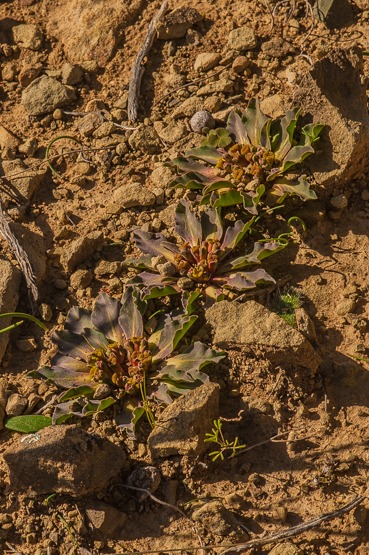
This member of a small group of geophytic Euphorbias has underground tubers up to 2.5 cm thick which can form large groups. The plants are stemless and either male or female.

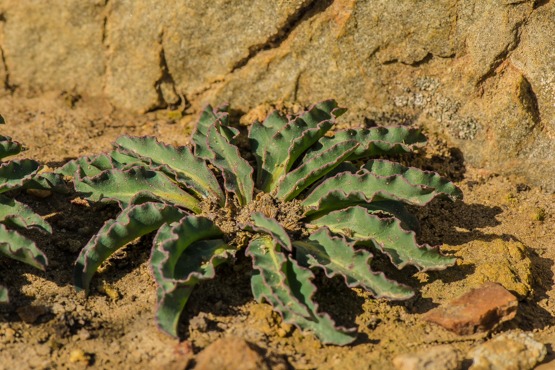
Its leaves have a stalk up to 5 cm long and may be oblong to almost lanceolate, linear or elliptic,1 to 5 cm long and 0.5 to 2.5 cm wide, often minutely hairy and grey-green, usually with wavy margins. They are only present in the growing period.
The flowering season is mainly June-September.

The species occurs on sandy and gravelly flats and slopes from near Springbok to the Cape Peninsula and the western part of the Little Karoo.


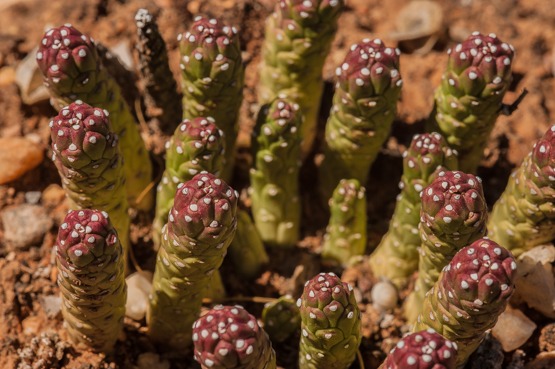
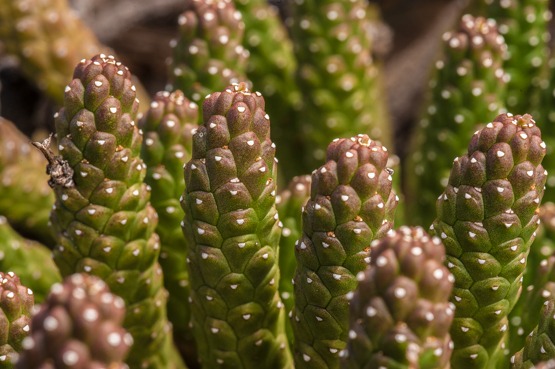
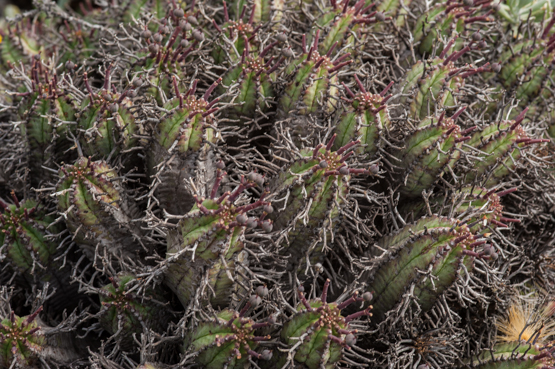
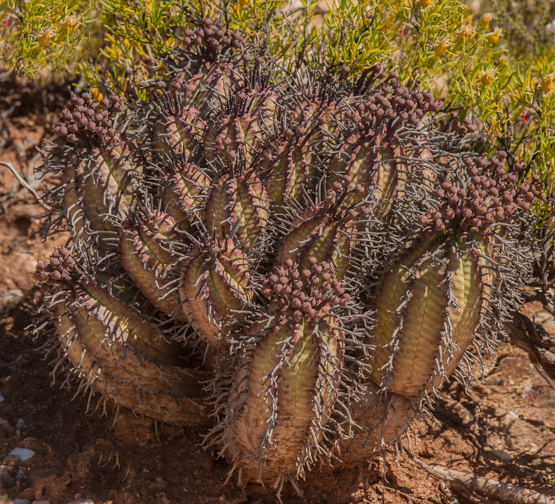
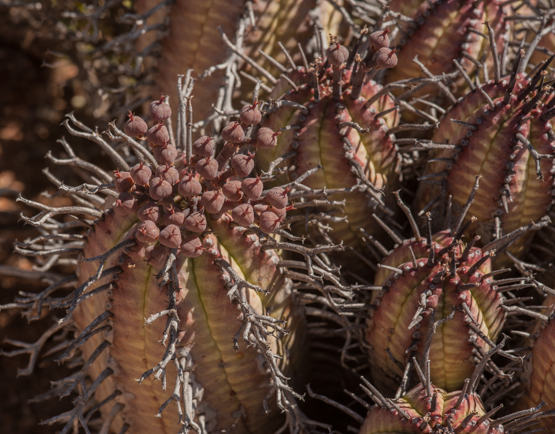
Euphorbia colliculina (vingerpol)

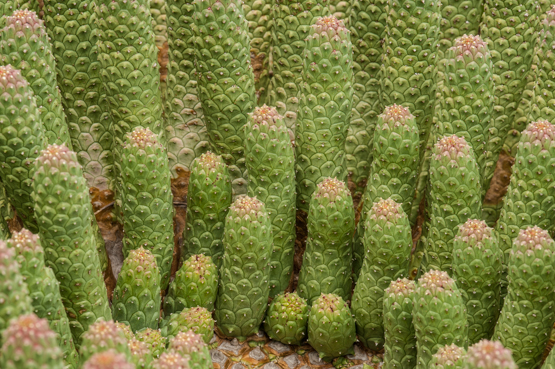
Only known from 4 localities between Calitzdorp and De Rust in the Little Karoo, this species is highly endangered by habitat loss and degradation (caused by ostrich farming and quarrying as well as soil erosion and urban expansion). The situation is further exacerbated by ruthless collecting.
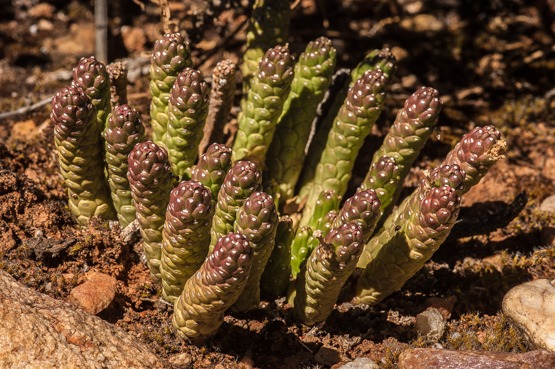
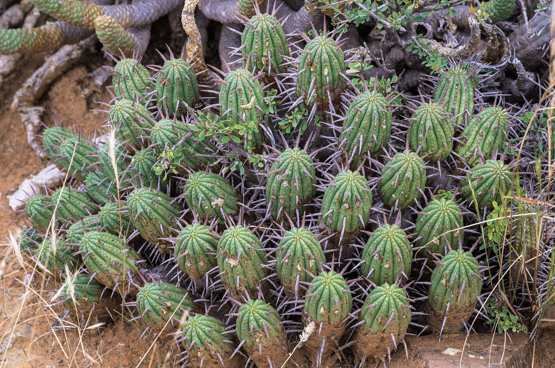
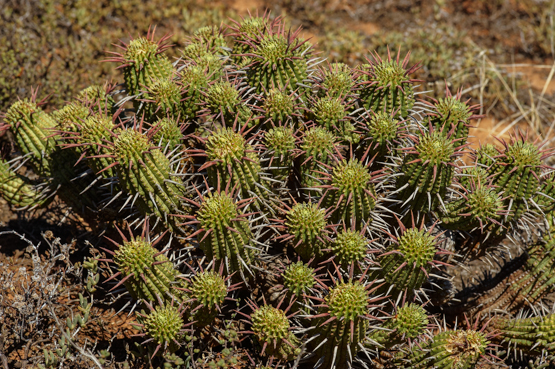
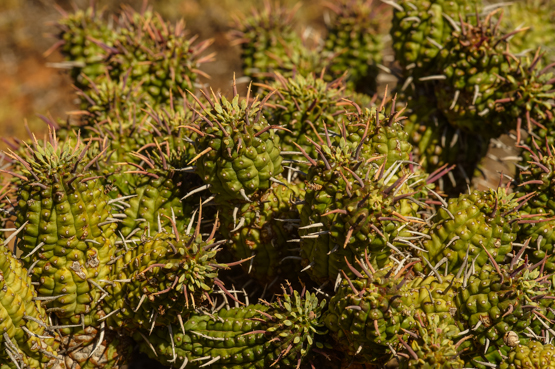
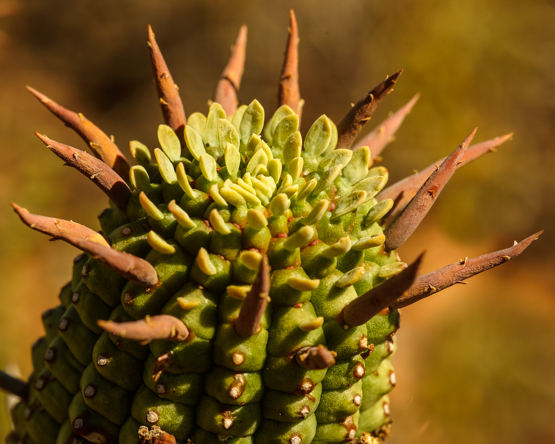
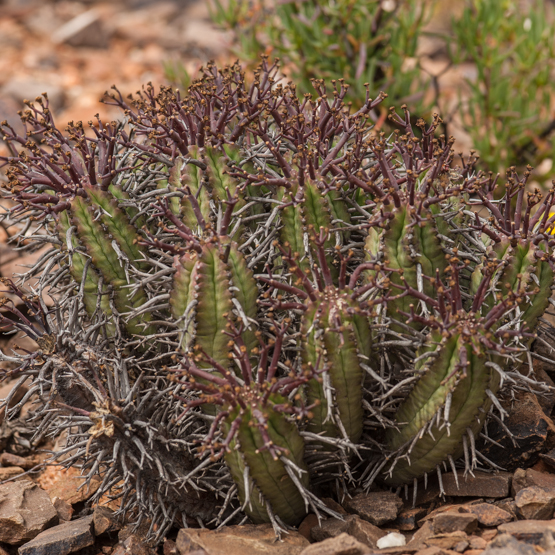
It is a member of the medusoid (caput-medusae) group: the plant consists of a large caudex, an underground tuber and rings of erect to spreading branches which are 3-12 cm long and to 2 cm thick.
The species is said to be close to E. fortuita occurring further west in the Ladismith area.


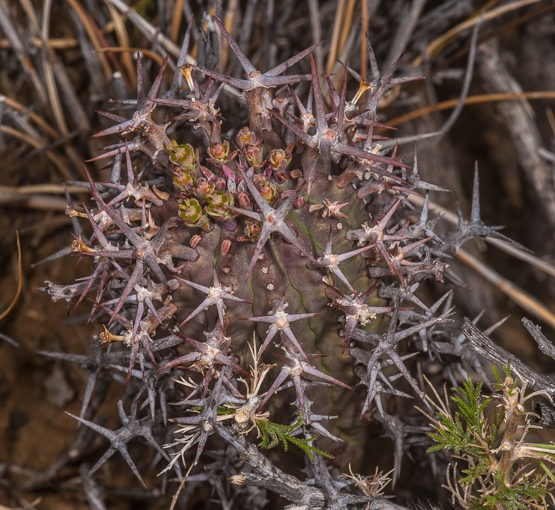
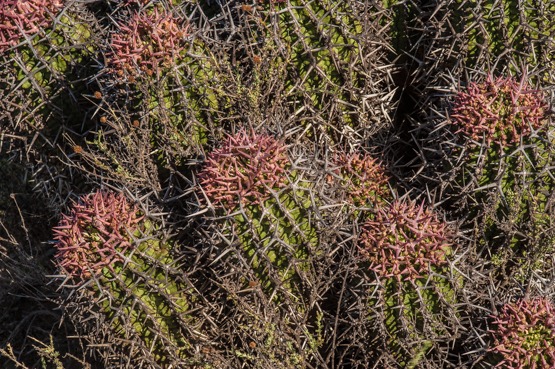
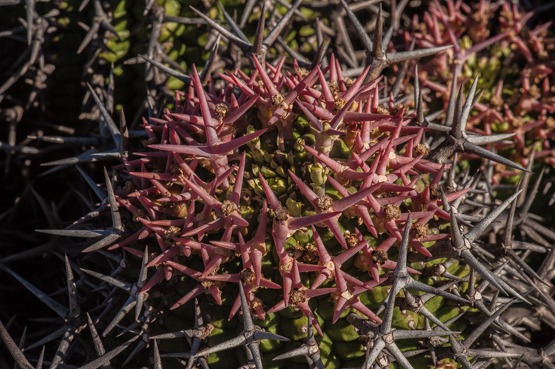
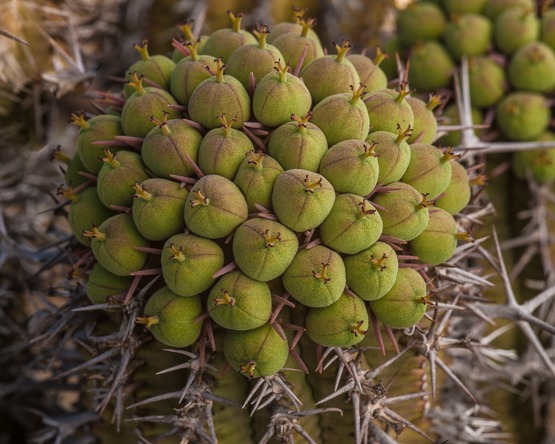
Euphorbia stellispina (skaapnoors, noorsdoring)

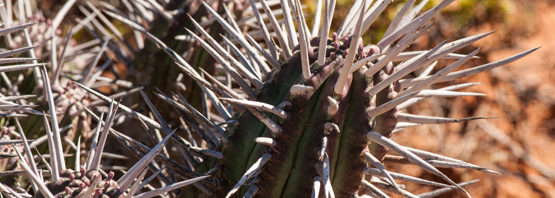
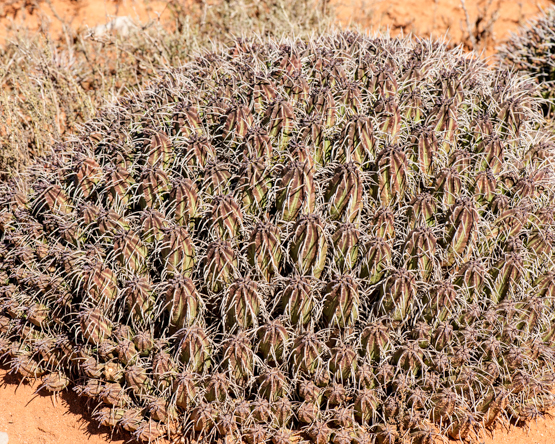
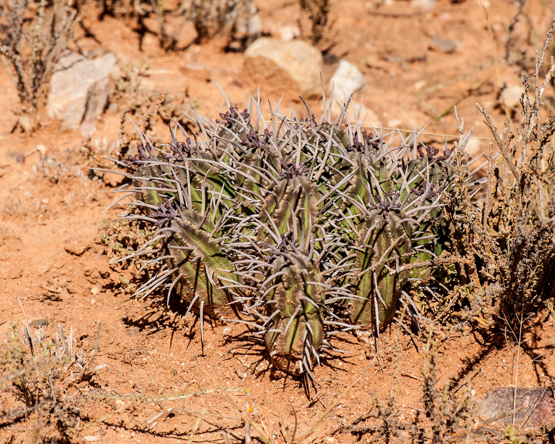
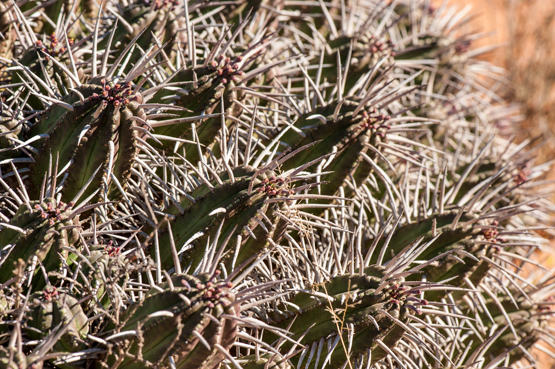
Usually found in dry scrub on shallow, stony ground, this attractive species is widespread in the Great Karoo where the plants form more or less dense clumps up to a meter tall and 1.5 m in diameter.

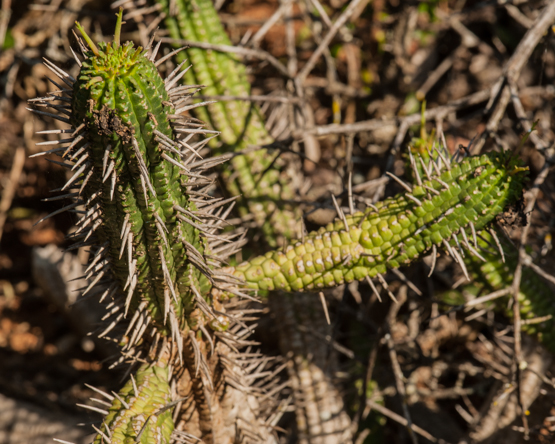
The branches are 3-8 cm thick, cylindrical to club-shaped, with 10-16 angles. The star-shaped spines to which the species name refers, are in fact modified fertile peduncles and are 0.4-2 cm long.
Flowers appear from July to September.


Euphorbia mauritanica

The name of this species is rather ironic. The plants were introduced into cultivation in Europe in the beginning of the 18th century or maybe even before, and believed to have come from “Mauritania”, a name used at that time for a large portion of northwestern Africa. We now know they do nor occur in that area at all.
On the contrary, the species is widespread in southern Africa, where it is found on flats and stony slopes, sometimes also on coastal dunes. It is a much-branched shrub up to 2 m tall with short-lived leaves. The flowers appear from May to November.
As it is a variable species, a number of varieties have been described in the past, but these are now regarded as ecotypes and their names therefore as synonyms.

euphmaur_DSC1425

euphmaur 1710

euphmaur 8129

euphmaur 9214

euphmaur 9217

euphmaur 4730


Euphorbia esculenta (1)

Of the about 30 species of the so-called medusoid group of Euphorbias, this is one of the biggest, sometimes reaching a metre or even more in diameter (including the branches).
It is very common over a large area stretching from the dry sandy plains east of Addo, northwards as far as Graaff Reinet and southwestwards towards the Baviaanskloof and the eastern border of the Little Karoo.
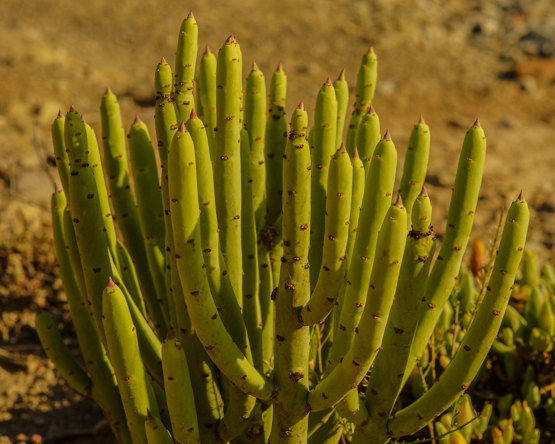
When the substrate is very hard, the main body is pushed above ground.
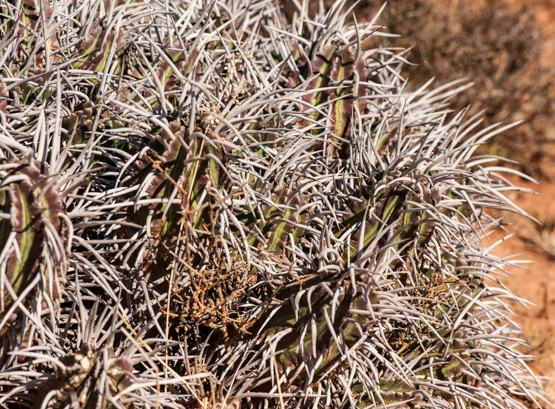
The name esculenta means “edible”, because the plants can be used as fodder in times of drought.
The flowers with their white woolly bracteoles give off a pleasantly sweet scent.

euphescu 9308
euphescu 2006_04_09#024
euphescu 8157

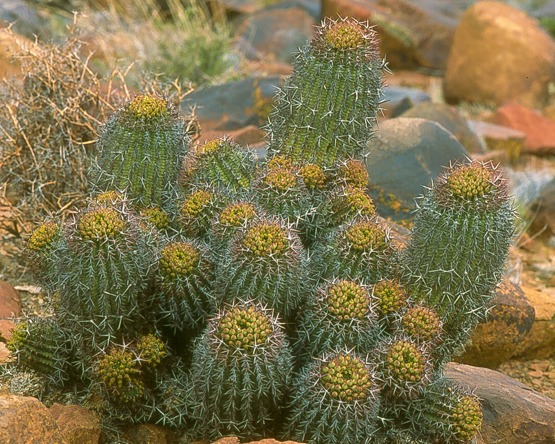
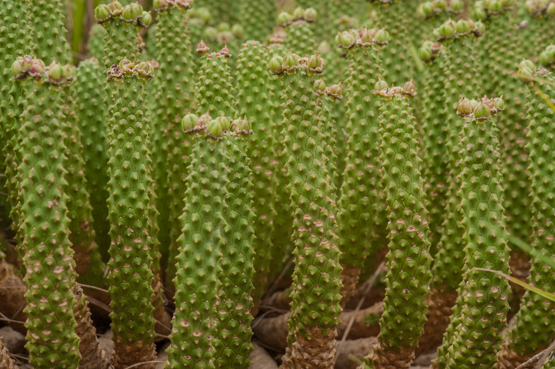
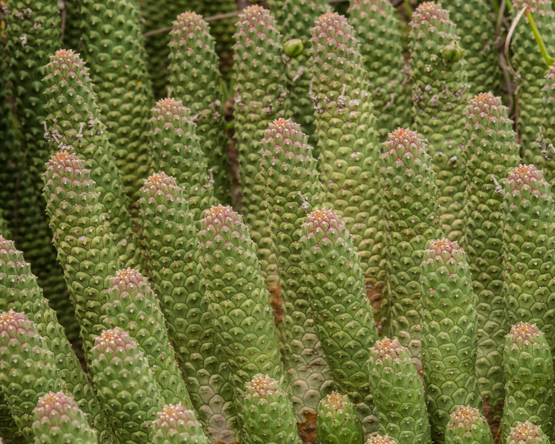
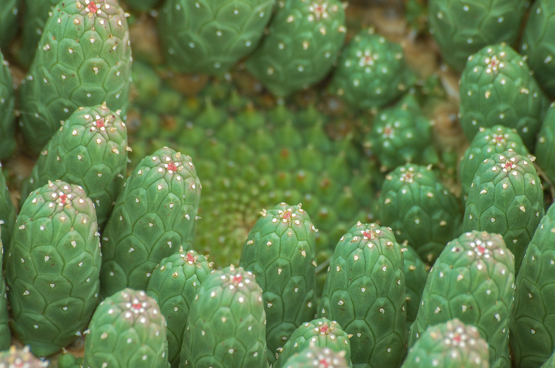
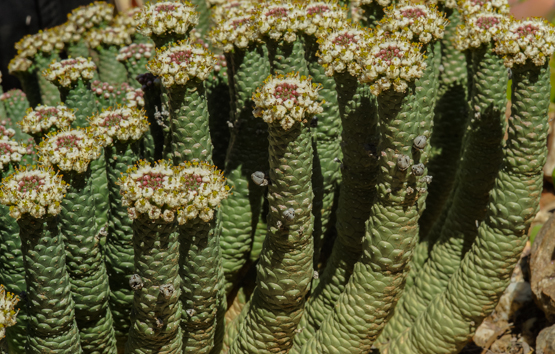
Euphorbia mammillaris

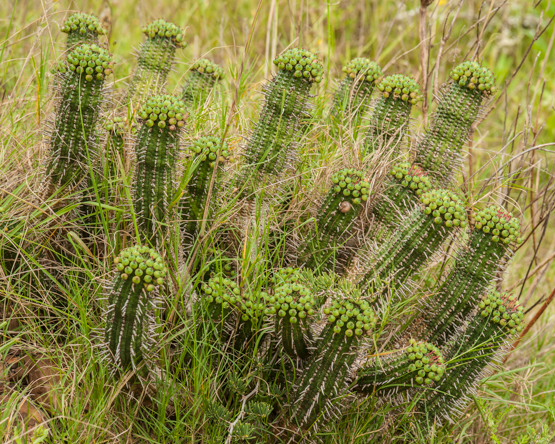
The original E. mammillaris was known to occur from the Riversdale district in the west to the Oudtshoorn area in the east. The plants growing there look like the ones in the first 3 pictures.
Pictures 4 and 5 show plants from near Port Elizabeth in the Eastern Cape. They represent what used to be called E. fimbriata, with rather narrower and more sinuous stems. This habit is an adaptation to the growing conditions there: a dense cover of bush or grass as opposed to the open habitats in the west.

euphmamm 1552

euphmamm 1553

euphmamm 1554

euphmamm 8114#2012-10-25

euphmamm 8126